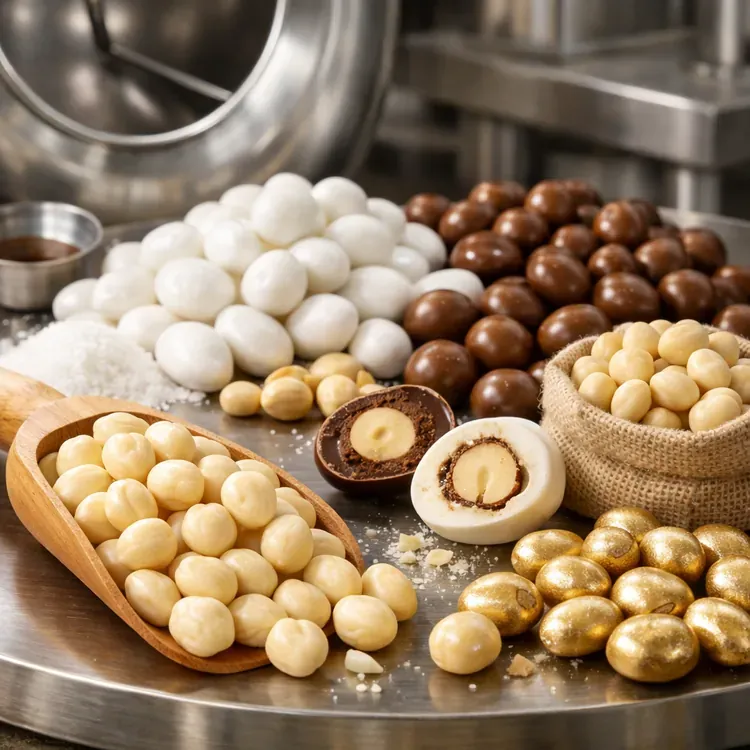
Process-focused guidance for panning lines
Calibration and coating yield
Calibrated kernels reduce variability in coating pickup. When centers vary widely, some pieces finish early (over-coated) while others lag
(under-coated), increasing rework and widening weight tolerances. Selecting a tight sieve band helps stabilize piece count per kilo and simplifies
batch planning.
Blanch quality and appearance
Blanching removes skins that can create dark specks under thin coatings or highlight unevenness in light-colored shells. For premium finishes,
many teams also specify limits on residual skin and surface defects to support consistent shine and color.
Moisture and crunch retention
Moisture impacts both the bite of the kernel and the stability of layered systems. Centers with inconsistent moisture can lead to textural drift
(softening) and can complicate drying during sugar panning. Managing moisture at the ingredient level supports a more predictable process and a
crisper finished bite.
Oxidation, shelf life, and flavor protection
Hazelnuts contain valuable aromatic compounds and fats that can oxidize over time, especially if exposed to oxygen, light, or heat. Even when the
dragée shell is protective, the starting freshness of the kernel matters. High-barrier packaging and controlled storage reduce the risk of off-notes.
Tight sieve bands
Low chips & splits
Low fines
Barrier packaging