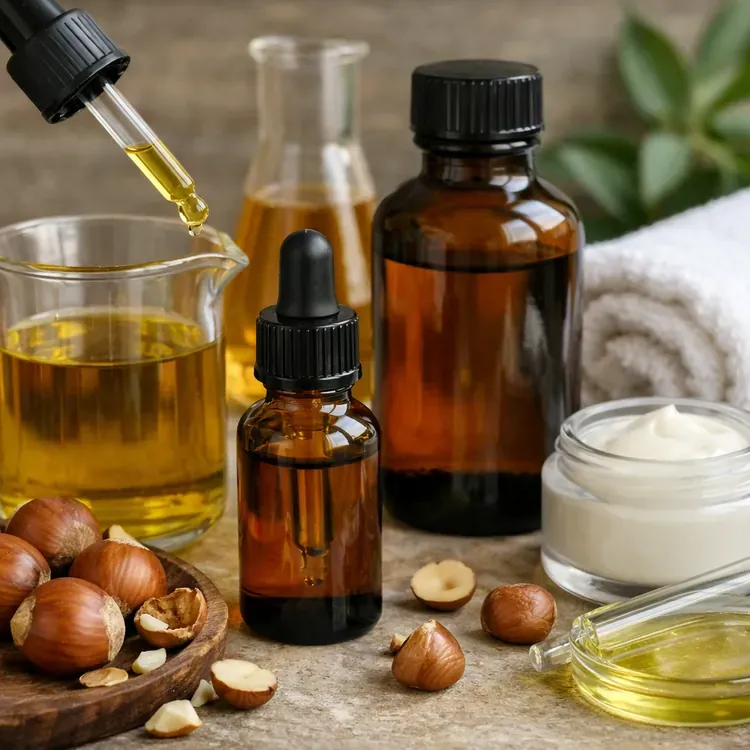
Stability & handling notes for cosmetic manufacturing
Oils are naturally sensitive ingredients. The main risks are oxidation (oxygen + heat + light) and changes in odor over time.
Controlling these factors helps prevent off-notes and protects the “fresh” sensory quality consumers expect from natural oils.
1) Oxidation control (oxygen + light)
Cold-pressed oils are often chosen for natural positioning, but they may retain more aroma character than refined oils. This is desirable in
some premium lines and undesirable in others. Regardless of positioning, minimizing oxygen exposure during transfers (closed lines, reduced
headspace) and using light-protective packaging helps preserve stability.
2) Temperature management
Temperature swings during freight and warehousing can accelerate oxidation and shift sensory quality. Temperature-aware freight planning and
“cool, dry storage” guidance improve repeatability across global distribution.
3) Filtration & clarity expectations
For brands using clear bottles, clarity is part of the product story. Filtration and sediment control help maintain a clean appearance.
For emulsions or opaque packs, clarity may be less critical, allowing a more “natural” look if desired.
4) Allergen and labeling considerations
Hazelnut oil is derived from a tree nut. Many customers require clear allergen declarations and supporting documentation for internal QA,
private label, or retailer compliance. We provide traceability and batch documentation to support your labeling approach.
Light-protective packs
Headspace control
Batch-to-batch sensory checks
Traceability & COA flow