Applications Library • Dairy

Hazelnut granules for yogurt toppers

A practical, procurement-ready overview of hazelnut granules used in yogurt toppers — including granule size selection, roast and crunch targets, moisture and oxidation controls, and packaging approaches for stable sensory performance at shelf life.

Back to applications

This page is written for procurement, R&D and QA teams sourcing inclusions for yogurt cups, topper sachets, and granola-style mix-ins. Share your pack format (dual-chamber vs. sachet), inclusion rate, and shelf-life target and we’ll recommend the right granule range and documentation set.

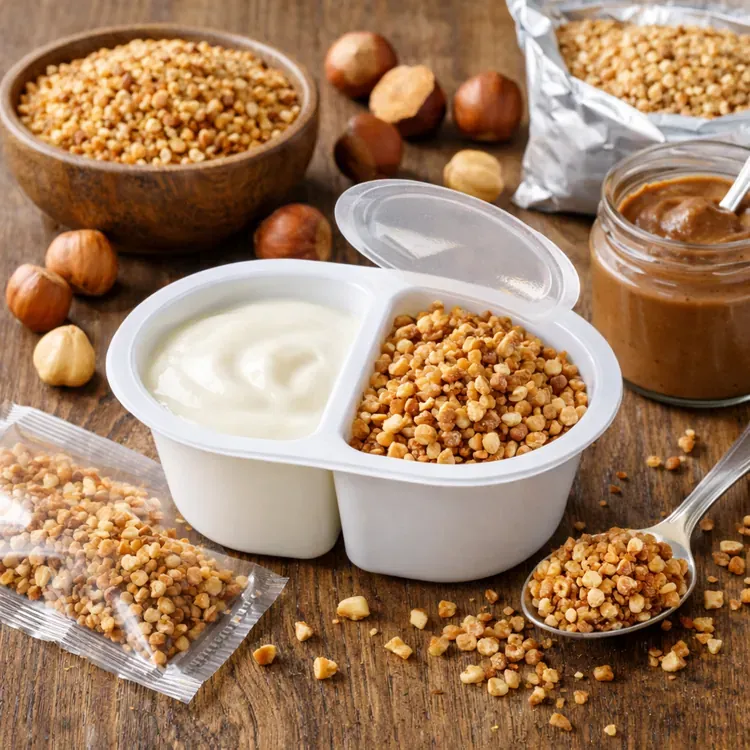
Hazelnut granules for yogurt toppers illustration

Where it fits

Hazelnut granules are used in yogurt toppers to add crunch, premium nut identity, and a warm roasted aroma that pairs well with dairy, fruit preps, honey, cocoa, and cereal clusters. Unlike baked goods, the main challenge here is not heat—it’s moisture exposure. Yogurt is high in water activity, and even brief contact can soften inclusions.

For that reason, the application is typically built around two design goals: (1) keep the topper dry until consumption (dual-chamber cups, lids, or sachets), and (2) protect the hazelnut aroma and fats from oxygen during distribution. In this category, the main drivers are crunch retention, dose accuracy, and shelf stability (texture + aroma).

We support manufacturers by aligning the hazelnut format and processing level to your packing line: calibrated kernels for controlled granulation, blanched options for lighter color targets, defined granule distributions for repeatable dosing, and meal/flour or oil where finer textures or aroma lift are needed in composite topper blends.

Export-ready documentation Lot traceability Controlled granules Bulk & retail options

Recommended formats

Typical starting points for pilots and scale-up. For yogurt toppers, granule uniformity (fines control) and barrier packaging are often the first levers to improve crunch and aroma consistency.

  • Roasted hazelnut granules (controlled cut) – the most common topper inclusion; designed for crunch and visual identity.
  • Natural or blanched kernels (calibrated) – used as the raw material for customers who granulate or roast in-house.
  • Hazelnut meal / flour – for finer blends, dusting systems, or cluster bases where a smoother texture is desired.

Hazelnut oil is typically used as a minor component in seasoning systems or for aroma lift, rather than as a primary “granule” inclusion.

Technical considerations

The most common variables that impact dosing, crunch perception, and shelf-life stability in yogurt-topper systems—especially dual-chamber cups and sachet-packed toppers.

  • Granule size distribution: tighter control improves dose accuracy and reduces dust/fines.
  • Fines management: nut dust absorbs humidity fast and can dull crunch; screened cuts reduce this risk.
  • Moisture management: critical for crunch retention; includes ingredient moisture targets and dry-room handling.
  • Oxidation protection: hazelnut fats are aroma carriers; oxygen barrier packaging helps prevent rancid notes.
  • Roast profile alignment: balanced roast preserves “fresh nut” notes and avoids bitterness; matched to your flavor profile.
  • Traceability & COA flow: supports QA release, audits, and consistent sourcing.

Practical tip: if your topper blend includes cereal clusters, align particle sizes across components to minimize segregation in hoppers and improve pack-to-pack uniformity.

Packaging approach

We can supply lined cartons, vacuum or MAP options and palletization suited to sea, road or air freight. For yogurt toppers, packaging is primarily selected to protect against oxygen and humidity during storage and distribution.

  • Roasted granules: oxygen barrier liners; optional vacuum/MAP for higher sensitivity programs.
  • Natural/blanched kernels: lined cartons/bags-in-cartons to support stable storage before processing.
  • Meal/flour: humidity-protective barrier bags to preserve flowability and prevent caking.

For sensitive formats (roasted cuts, paste), oxygen protection and temperature management are key to preserving aroma. We can also align pallet patterns and labeling for efficient receiving and lot-level traceability.

See bulk supply details →

Selection guide: granule size, pack format, and consumer experience

Yogurt toppers are judged in the first bite: consumers expect a clean crunch, an even distribution of inclusions, and a fresh roasted nut note. Most selection decisions come down to three factors: granule size, how the topper is kept dry, and how long the product must stay stable.

Design choice Recommended direction What it impacts
Granule size Controlled mid-size granules with low fines Crunch perception, dosing accuracy, and reduced dust that picks up humidity quickly.
Pack format Separate dry compartment (lid/dual-chamber) or sachet Limits moisture exposure time; biggest driver of crunch retention.
Shelf-life target Match packaging barrier level to storage duration Protects roasted aroma and reduces oxidation-related off-notes over time.
Visual target Blanched granules for lighter appearance Cleaner, lighter look; reduces skin specks in premium dairy presentations.
Blend complexity Align particle sizes across nuts/cereals Reduces segregation in handling and improves uniformity across cups.

Selection is usually validated through a short pilot: hopper flow + dosing checks, transit simulation (to evaluate fines generation), and sensory checks at pack and at shelf-life milestones.

How to protect crunch and aroma in real-world distribution

Yogurt-topper systems face two stressors during distribution: humidity exposure (which softens inclusions) and oxygen exposure (which dulls roasted aroma and can lead to rancid notes). Ingredient specifications and packaging choices work together here—one without the other often leaves performance gaps.

  • Reduce fines: dust absorbs moisture fastest and tends to settle, creating “bottom-heavy” dosing and softer texture.
  • Choose the right roast: balanced roast supports aroma without excessive bitterness; it also influences perceived freshness over time.
  • Use barrier packaging: oxygen and humidity barriers protect both crunch and nut aroma throughout shelf life.
  • Handle in controlled conditions: dry-room storage/handling reduces the chance of early moisture pickup before packing.
  • Align with your topper blend: if mixed with cereals, size matching reduces segregation and helps keep every cup consistent.

Practical tip: if crunch is good in the plant but soft at retail, review humidity exposure points (warehouse, transport, lidding integrity) and consider upgrading barrier level for the topper compartment.

Typical specification markers

Below is a practical checklist used by procurement and QA teams for hazelnut granules in yogurt toppers. In addition to core safety and compliance markers, topper programs typically add emphasis on granule distribution and moisture/oxidation controls to protect crunch and aroma.

ParameterHow we align itWhy it matters in toppers
MoistureControlled to your target rangeHelps maintain crunch and reduces clumping risk in storage.
Granule size / toleranceScreened and calibrated fractionsImproves dosing accuracy and reduces dusting/fines.
Fines levelControlled through screening and handlingReduces fast moisture pickup and bottom-of-pack settling.
Defect sortingScreened and optically sorted where requiredImproves visual quality in premium dairy applications.
Micro profileAligned to customer specifications and destination requirementsSupports QA release and audit readiness.
AflatoxinManaged through risk-based sourcing and partner controlsCritical compliance marker for many import markets.
PackagingVacuum / MAP / liners and export cartons as requiredProtects aroma and reduces oxygen/humidity exposure through transit.

Final values depend on product form and customer requirements. We share lot documentation with each shipment and can standardize specs for recurring topper programs.

FAQ

Which hazelnut format is most common for yogurt toppers?

Most yogurt-topper programs use roasted hazelnut granules (controlled cut size) for a clean crunch and visible nut identity. Natural or blanched kernels are often the starting raw material, then processed into calibrated granules. Meal/flour is used when a finer texture is needed or as part of coated clusters, while hazelnut oil is generally used in small amounts for aroma lift or as a carrier in seasoning systems.

How do you keep hazelnut granules crunchy when packed with yogurt?

Crunch retention depends on moisture exposure time and packaging design. Granules are typically packed in a separate dry compartment (dual-chamber cups or sachets) and protected with humidity/oxygen barrier materials. From the ingredient side, controlling moisture, reducing fines, and using oxygen-protective packaging helps maintain crisp texture and roasted aroma throughout shelf life.

Can you match a target particle size or cut?

Yes. We can supply controlled granule sizes and align tolerance bands to your dosing equipment (vibratory feeders, augers) and pack format (sachets, cups). Consistent particle distribution improves dose accuracy and reduces dusting.

Do you support long-term supply programs?

Yes. We structure annual and multi-shipment programs with consistent specifications, batch documentation (COA), and forecast-based planning to support stable quality and uninterrupted production.

Next step

Send your yogurt format (standard cup, dual-chamber, sachet topper), target inclusion rate, quantity and destination. We will propose suitable granule ranges, packaging, and a shipment plan aligned to your dosing equipment and shelf-life target.

  • For dual-chamber cups: optimize granule distribution and fines control for consistent dosing.
  • For sachets: align particle size to fill accuracy and minimize dust.
  • For longer shelf life: upgrade barrier packaging and oxidation controls to protect aroma.
Review products