Applications Library • Dairy

Hazelnut paste for frozen desserts

Hazelnut paste is a high-impact ingredient in gelato, ice cream, bars, sandwiches, and layered frozen desserts. This page outlines the most common hazelnut formats, how they affect texture and flavor, and what procurement and QA teams typically specify for reliable scale-up. Use it as a practical starting point for pilots, reformulations, and long-term supply programs.

Back to applications
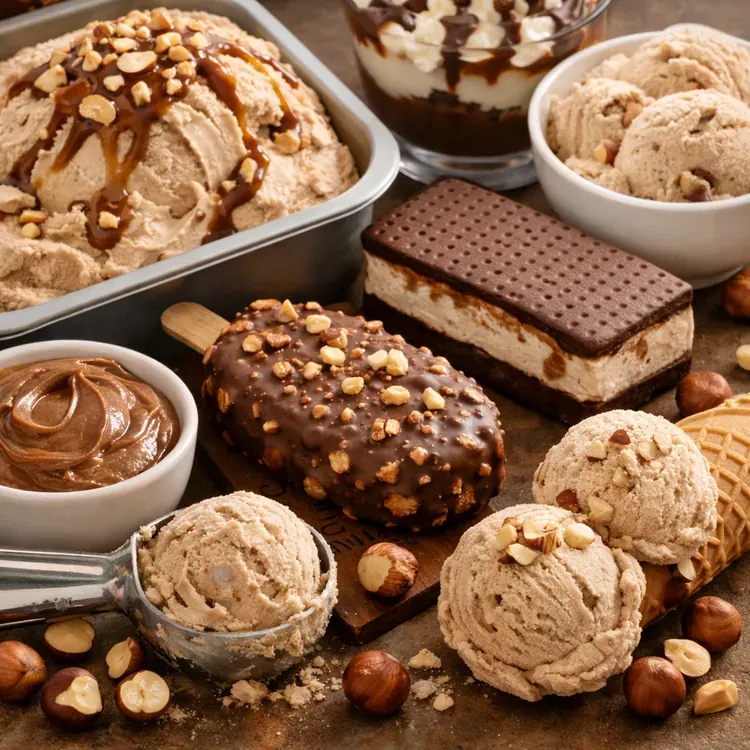
Hazelnut paste for frozen desserts illustration

Where it fits

Hazelnuts are selected for frozen desserts because they deliver a naturally sweet, rounded flavor profile and a clean fat system that carries aroma well. When processed into paste (or used as flour/meal), hazelnuts contribute both flavor intensity and mouthfeel—especially in premium, high-solids formulations.

In practice, manufacturers focus on four outcomes: consistent flavor from lot to lot, stable texture in cold storage, predictable dosing on the line, and controlled oxidation so roasted notes remain fresh rather than stale. These outcomes are achieved by selecting the right product form (kernel, cut, meal, paste), setting a roast profile, and applying protective packaging matched to transit time and storage conditions.

We support frozen dessert producers by aligning hazelnut format and processing level to your equipment: whole kernels for in-house roasting, blanched kernels for light color targets, controlled cuts for inclusions, and paste/flour for homogeneous base mixes.

Export-ready documentation Lot traceability Custom cuts Bulk & retail options

How hazelnut paste behaves in frozen systems

Hazelnut paste is primarily a fat-and-solids ingredient. In frozen desserts it affects:

  • Flavor release: hazelnut fat carries volatile aromas; roast level and oxidation control strongly influence perceived freshness.
  • Viscosity and body: paste increases solids and fat, which can reduce iciness and improve scoopability when balanced with stabilizers and sugars.
  • Overrun and aeration: fat composition and particle size can influence foam stability during freezing; consistent grind helps keep texture uniform.
  • Perceived grit: larger particles or inconsistent grind may show up as sandy texture in gelato/ice cream; controlled particle size is a common spec item.
  • Fat migration risk: in layered products (coated bars, sandwiches, filled inclusions), hazelnut fat can migrate into wafers, cookies, or coatings unless barriers and formulation are designed accordingly.

The best “hazelnut signature” is usually achieved by balancing roast aroma with freshness protection—rather than maximizing roast intensity alone. In procurement terms, this means defining the roast band, packaging method, and acceptable time-in-transit as part of the specification.

Recommended formats

Typical starting points for pilots and scale-up. We adapt roast level, cut tolerance, grind approach, and packaging to your process and shelf-life goals.

  • Hazelnut paste (smooth): for gelato bases, ice cream mixes, and sauces where uniform dispersion matters.
  • Hazelnut meal / flour: useful for dry blending, bakery-style inclusions, or when you want texture control without fully emulsifying.
  • Natural kernels (calibrated): for in-house roasting or where you want full control over aroma development.
  • Blanched kernels: for lighter color targets and reduced skin impact (less tannic notes).
  • Roasted diced/chopped: for inclusions, variegates, and premium “bits” where crunch and aroma are desired.

If you’re launching a new line, a common path is: pilot with paste → lock roast band → confirm particle/flow specs → finalize packaging and pallet pattern.

Technical considerations

The variables that most often impact throughput, flavor stability, and customer perception in frozen desserts.

  • Roast profile: light/medium/dark targets, and whether roast is optimized for paste or for inclusions (different aroma curves).
  • Particle size & grind consistency: key for avoiding grit; especially important in gelato and premium ice cream.
  • Oil separation: paste may separate if temperature fluctuates or if formulation lacks emulsification—packaging and storage guidelines reduce risk.
  • Oxidation control: oxygen barrier packaging, headspace reduction, and careful handling protect roasted notes.
  • Fat migration: layered products and filled inclusions often need barrier fats, coatings, or process controls to protect texture.
  • Allergen control: nuts require clear segregation and documentation; align labeling and control plans to your destination market.
  • Process temperature: warm mix steps can accelerate aroma loss; many producers add paste later in the process or under controlled conditions.

Procurement tip: define what “consistent flavor” means for your team—often a combination of roast band + packaging method + max transit/storage temperature exposure.

Packaging approach

Hazelnut ingredients are sensitive to oxygen, heat, and repeated temperature swings. Packaging is therefore part of the technical specification—not just a logistics decision.

  • Paste: oxygen-barrier bags/liners; vacuum or MAP where appropriate; export cartons or pails depending on handling.
  • Roasted cuts: strong oxygen protection (often vacuum/MAP) to preserve aroma; robust outer packaging to prevent crushing.
  • Kernels (natural/blanched): lined cartons or bags with pallet patterns matched to route; moisture protection and clean handling are prioritized.
  • Documentation: batch/lot traceability, QA parameters, and export paperwork aligned to destination requirements.

For sensitive formats (roasted cuts, paste), oxygen protection and temperature management are the two biggest levers for preserving aroma through transit and storage.

See bulk supply details →

Typical specification markers

Below is a practical checklist commonly used by procurement and QA teams. We align each item to your destination market, customer requirements, and processing level (kernel, cut, flour, paste). If you already have internal specs, we can map them to the closest workable hazelnut format and packaging method.

Parameter How we align it
Moisture Controlled to your target range to support stability and prevent texture issues during storage.
Defect sorting Screened and optically sorted where required; defect tolerance bands can be agreed by grade and intended use.
Particle / cut size Calibrated kernels and controlled cuts (sliced/diced/chopped); for paste/flour, grind and dispersion targets can be defined.
Roast profile Aligned to your flavor and color target; we can work within a defined roast band suitable for your process.
Micro profile Aligned to customer specifications and destination requirements; documentation is supplied with shipment lots.
Aflatoxin risk management Managed through risk-based sourcing and partner controls, with documentation aligned to import expectations.
Oxidation protection Oxygen barrier packaging, headspace management, and—where appropriate—vacuum or MAP to preserve aroma.
Allergen controls Clear allergen documentation and handling practices; supports your labeling and segregation requirements.
Packaging & palletization Vacuum / MAP / liners and export cartons as required; pallet pattern matched to route and unloading method.

Final values depend on product form and customer requirements. We share lot documentation with each shipment and can support multi-shipment programs with consistent specification targets.

Application use cases

Gelato and premium ice cream bases

Smooth hazelnut paste is commonly used for a uniform, clean flavor and a rich mouthfeel. Texture consistency depends on particle control and stable dispersion through the mix.

  • Best fit: smooth paste, or paste + controlled fine meal for a slightly “nutty” texture.
  • Key focus: particle consistency and oxidation protection.
  • Procurement cue: specify roast band + packaging + handling temperature guidance.

Inclusions, variegates, and ripple systems

Diced or chopped roasted hazelnuts create crunch and a premium visual cue. For ripples, meal/flour can provide body while keeping dosing predictable.

  • Best fit: roasted diced/chopped, meal/flour for controlled viscosity.
  • Key focus: preventing aroma loss and maintaining crunch.
  • Procurement cue: define cut tolerance and packaging (often vacuum/MAP for roasted cuts).

Bars, sandwiches, coatings, and layered desserts

Hazelnut paste and roasted inclusions both work well, but fat migration and barrier design become more important. Packaging and formulation choices help preserve wafer/cookie texture and coating snap.

  • Best fit: paste for fillings, roasted bits for crunch and aroma.
  • Key focus: fat migration control and shelf stability.
  • Procurement cue: share the structure (layers/coatings) so we can propose formats and handling guidance.

FAQ

Which hazelnut format is most common for hazelnut paste for frozen desserts?

Most customers start with hazelnut meal/flour or a smooth hazelnut paste, then fine-tune roast, fat content, and particle size to match viscosity, dosing, and shelf-life requirements. Paste is preferred when you need a homogeneous base; flour/meal is useful when you want dry blending options or controlled texture.

Can you match a target particle size or cut?

Yes. We can supply calibrated kernels and controlled cuts (sliced, diced or chopped) and align tolerance bands to your process. For paste and flour, we can work toward your target grind and flow profile depending on formulation and intended use.

How do you help protect hazelnut flavor during storage and transport?

We focus on oxygen and temperature control. For roasted cuts and paste, we recommend oxygen-barrier packaging, reduced headspace, and—in many cases—vacuum or MAP. Palletization and routing are selected to minimize heat exposure and preserve aroma.

Do you support long-term supply programs?

Yes. We structure annual and multi-shipment programs with consistent specifications, batch documentation, and forecast-based planning. This helps manage seasonal demand peaks and maintain recipe consistency over time.

What should we send to get a fast, accurate specification proposal?

Send the finished product type (gelato, ice cream, bar, sandwich, coated product, layered dessert), your target inclusion rate, desired color/roast profile, any viscosity or particle requirements, preferred pack size, destination country, and shipment cadence. If you have a benchmark sample or target spec sheet, include that too.

Next step

Share your target product, annual volume estimate (or trial volume), and destination. We will propose suitable hazelnut formats, packaging, and a shipment plan designed to protect flavor and maintain specification consistency across lots.

  • For trials: specify application, target taste, and pack preference so we can suggest an efficient starting format.
  • For scale-up: share your specification markers (roast band, particle targets, packaging, micro limits) and forecast cadence.
  • For procurement: include destination, incoterms preference, and required documentation list.
Review products