Applications Library • Industrial

Hazelnut paste for high-shear mixing lines

A practical, procurement-ready overview of hazelnut paste performance on high-shear mixers — including recommended formats, grind & consistency targets, dispersion and pumpability considerations, oxidation and temperature control, and export packaging approaches.

Back to applications
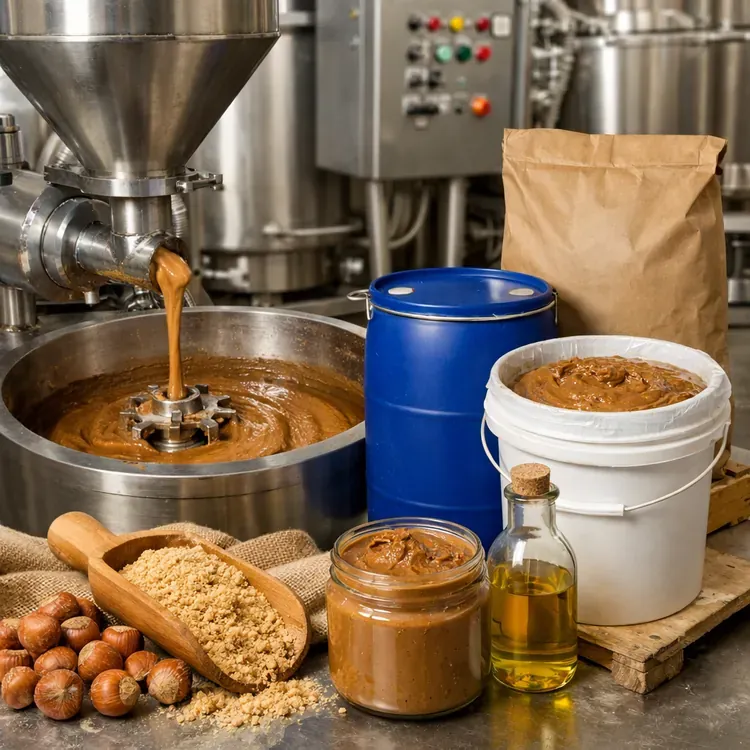
Hazelnut paste for high-shear mixing lines illustration

Where it fits

High-shear mixing is used when manufacturers need fast dispersion, consistent texture, and repeatable results across large batches. Hazelnut paste (a fat-rich ingredient with natural solids) can perform extremely well on these lines — provided the specification matches your equipment and process window.

Typical use cases include confectionery bases, fillings, spreads, sauces, bakery creams, dairy and frozen dessert components, and compound systems where hazelnut contributes both flavor and structure. The main drivers in high-shear environments are dispersion reliability (no stubborn lumps), predictable flow (pumpability and dosing), and stability (minimizing separation and protecting aroma during processing).

  • Dispersion: paste and dry ingredients must wet out evenly without persistent agglomerates.
  • Process heat: shear can raise temperature; specifications should protect flavor and prevent oxidation stress.
  • Downstream equipment: stable grind helps protect pumps, valves, filters and fillers.
  • Repeatability: defined roast and consistent lots reduce batch-to-batch variation.
Defined grind & consistency Pump & dosing friendly Oxidation protection Lot traceability
Recommended formats

Typical starting points for pilots and scale-up. We align roast style, grind and packaging to your batch size and mixing method.

  • Hazelnut paste / puree (predictable dispersion and texture control)
  • Hazelnut meal / flour (dry addition for controlled solids and faster storage handling)
  • Hazelnut oil (optional: fat standardization, flavor lift, viscosity tuning)

If your process is sensitive to color, we can support both roasted flavor profiles and lighter options.

Technical considerations

Key variables that impact throughput, mixing efficiency, texture and shelf stability on high-shear lines.

  • Grind & dispersion behavior: practical grind targets reduce grit and support smooth texture
  • Consistency at your working temperature: helps stable pumping, metering and dosing
  • Process heat management: shear-related temperature rise can affect aroma and oxidation
  • Oil separation control: handling and re-homogenization guidance for uniform batches
  • Dust and wet-out (meal/flour): dust control and addition sequence to prevent clumping

Packaging approach

Industrial lines benefit from packaging that protects flavor while supporting fast, clean handling at scale.

  • Pails / drums with food-grade liners for paste
  • Moisture- and dust-protected bags for meal/flour
  • Oxygen protection options to preserve roasted aroma
  • Export cartons & palletization suited to sea, road or air freight

For paste: stable storage temperature and minimizing oxygen exposure help maintain aroma and reduce separation during long transit.

See bulk supply details →

How to spec hazelnut paste for high-shear performance

A high-shear mixer can solve dispersion problems — but it can also magnify weaknesses in an ingredient specification. A good procurement specification ties together process conditions (shear, temperature, batch time), equipment needs (pumps, meters, filters), and product targets (texture, flavor, shelf stability).

1) Define the process window

Share the practical details that influence paste behavior. Small differences can change flow and dispersion.

  • Batch size and typical mixing time
  • Working temperature range (including heat-up during shear)
  • Where paste is added (pre-melt, post-melt, recirculation loop, inline dosing)
  • Downstream constraints (filters, fillers, depositor nozzles)

2) Match grind & consistency

The goal is smooth texture and predictable flow — without forcing excessive shear time.

  • Choose a grind that supports fast wet-out and dispersion
  • Set consistency targets that match pump and dosing behavior
  • Plan for re-homogenization before use (especially after storage)
  • Use controlled meal/flour to avoid dust and clumping issues

3) Protect aroma & stability

High-shear processing can stress fat systems; packaging and handling protect flavor and shelf-life.

  • Use oxygen protection to preserve roasted notes
  • Keep storage temperatures stable to reduce separation
  • Align roast profile to your final product intensity
  • Maintain strong lot documentation for repeatability

If you share your application (spread, filling, dairy base, sauce), line layout and target texture, we can propose a starter specification designed for your mixing conditions.

Typical specification markers

Below is a practical checklist used by procurement and QA teams for industrial mixing lines. We align each item to your destination market, customer requirements and processing method (batch vs inline, paste vs meal/flour).

ParameterHow we align it
Roast profile / colorDefined roast style aligned to your flavor target (and optional lighter color approaches)
Grind / particle behaviorPractical grind targets for smooth texture and reduced equipment interruption
Consistency / flowAligned to pumping, metering and dosing; guidance for re-homogenization before use
Oil separation tendencyManaged through consistent processing and storage/handling guidance
MoistureControlled to your target range (important for stability and dry ingredient handling)
Micro profileAligned to customer specifications and destination requirements
AflatoxinManaged through risk-based sourcing and partner controls
Defect sortingScreened and optically sorted where required
Allergen documentationTree nut allergen controls and traceability documentation for your program
PackagingPails/drums with liners for paste; protected bags for meal/flour; export cartons as required

Final values depend on product form and customer requirements. We share lot documentation with each shipment.

FAQ

Which hazelnut format is most common for hazelnut paste for high-shear mixing lines?

Most customers start with hazelnut paste / puree because it disperses predictably and supports repeatable texture. Meal / flour is used when a dry addition is preferred (for solids control and storage handling), and hazelnut oil may be used to standardize fat content or tune flow depending on the formulation.

Can you match a target particle size or cut?

Yes. We can supply calibrated kernels and controlled cuts (sliced, diced or chopped) and align tolerance bands to your process. For high-shear mixing environments, grind and dust control are usually the most important levers to protect throughput and product consistency.

Do you support long-term supply programs?

Yes. We structure annual and multi-shipment programs with consistent specifications, batch documentation and forecast-based planning — supporting stable performance across production cycles and seasonal volume changes.

Next step

Send your application, batch size, mixing method (batch vs inline), working temperature window, and destination. We will propose suitable formats (paste / meal / oil), packaging, and a supply plan aligned to your high-shear line.

Review products