Applications Library • Bakery

Hazelnut paste in croissant fillings

A practical, procurement-ready guide to using hazelnut paste in croissant fillings — including paste vs. praline options, bake-stable vs. post-bake injection use, viscosity and oil separation control, and packaging approaches that protect aroma through shelf life.

Back to applications
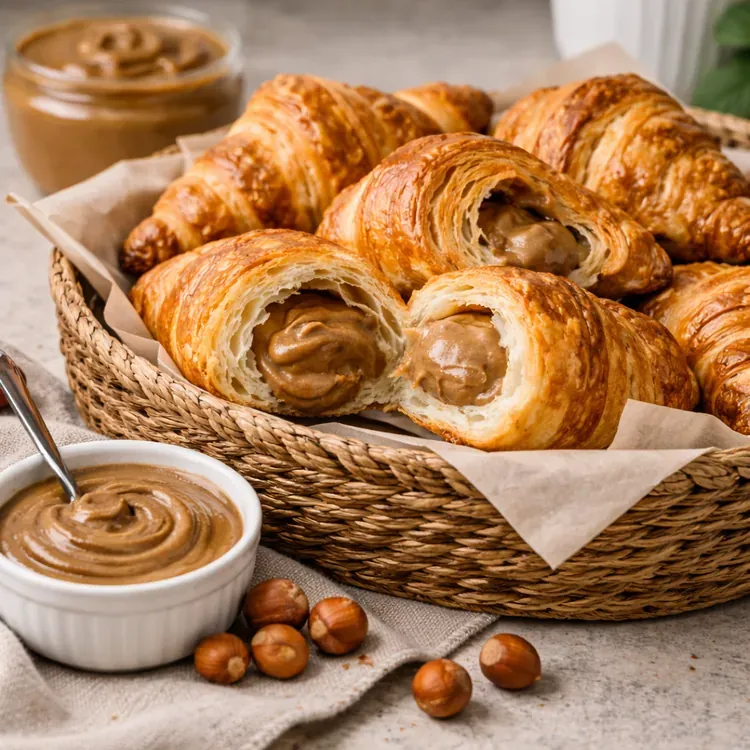
Hazelnut paste in croissant fillings illustration

Where it fits

Hazelnut paste is widely used in croissant programs to deliver a recognizable nut aroma, a rich roasted flavor profile, and a smooth texture that works across both artisan and industrial lines. Compared with pieces or meal, paste provides more uniform taste distribution and enables consistent dosing in automated depositing or injection systems.

In croissant fillings, the main success factors are flavor consistency (roast profile + lot stability), process control (viscosity at your dosing temperature), and shelf stability (oxidation protection and fat phase stability). We support manufacturers by aligning paste type, grind and packaging to your line and your product positioning.

  • Pre-bake filling (bake-stable): deposited before baking; designed to hold shape and avoid leaking.
  • Post-bake injection: filled after baking; optimized for smooth flow and consistent shot weights.
  • Layered applications: paste used with chocolate, creams or pralines; managed for fat migration and stability.

Hazelnut is a tree nut allergen. Align your allergen controls (segregation, cleaning validation, labeling) before scale-up.

Roast profile control Defined grind (micron) Oxygen protection Lot traceability
Recommended formats

Typical starting points for trials and scale-up. We adapt roast level, grind and packaging to your filling method (pre-bake or post-bake).

  • Roasted hazelnut paste (smooth; clean roasted profile; most common base)
  • Hazelnut praline paste (hazelnut + sugar; sweeter profile; popular for injected fillings)
  • Blanched hazelnut paste (lighter color target; milder roast notes)

Optional supporting ingredients we can supply as part of a program: hazelnut meal/flour (for body) and hazelnut oil (for controlled flow tuning).

Technical considerations

The variables that most often affect throughput, depositor performance and shelf stability for croissant fillings.

  • Viscosity window: match paste flow to your depositor/injector temperature and pump design
  • Particle size (grind): smoother grind reduces nozzle blockage and improves mouthfeel
  • Oil separation: controlled through consistent grind, storage temperature and mixing guidance
  • Oxidation management: protect aroma and reduce rancidity risk using barrier packaging and handling
  • Fat migration: manage when paired with chocolate/creams to reduce bloom and texture drift
  • Bake vs. post-bake use: bake-stable systems require structure; injected systems prioritize flow consistency
  • Allergen control: line segregation, rework rules and labeling alignment

If you share your filling method (pre-bake deposit or post-bake injection), we can recommend a practical grind and handling plan.

Packaging approach

Paste quality is protected by limiting oxygen exposure and preventing temperature abuse during storage and transport. We offer export-ready solutions for industrial bakeries and ingredient blenders.

  • Pails / drums with food-grade liners for paste (selected to reduce oxygen ingress)
  • Vacuum or MAP options where applicable to protect roasted aroma
  • Sealed headspace control and clear lot labeling (roast, grind, net weight, batch ID)
  • Palletization suited to sea, road or air freight

For best results, store cool and stable, avoid repeated warming/cooling cycles, and mix paste before dosing to homogenize the fat phase.

See bulk supply details →

How manufacturers use hazelnut paste in croissant programs

Croissant fillings are commonly designed around one of two processing routes. Choosing the right paste type and grind early helps reduce line stops and supports predictable sensory results at scale.

Pre-bake deposit (bake-stable)

Filling is deposited before baking and must hold shape without excessive leaking. Bake-stable systems typically prioritize controlled viscosity, structural stability and compatibility with butter-rich laminated dough.

  • Choose a grind that supports smooth deposit without “grit”
  • Align roast profile so final bake does not push bitterness
  • Manage fat migration when combined with chocolate or creams

Post-bake injection

Filling is injected after baking and requires reliable flow at a defined temperature. Here, paste consistency and oil separation control are key to stable pump performance and repeatable shot weights.

  • Specify viscosity window at your dosing temperature
  • Control particle size to protect injectors/nozzles
  • Use oxygen protection to preserve aroma through shelf life

Hybrid & premium systems

Premium croissants often combine hazelnut paste with praline, cocoa, or inclusions. These systems benefit from tighter specs to ensure stable texture and appearance across distribution.

  • Praline paste for sweetness and spreadable texture
  • Optional meal/flour for “body” and flavor persistence
  • Coordinate packaging and storage to minimize oxidation

Typical specification markers

Below is a practical checklist used by procurement and QA teams for hazelnut paste intended for croissant fillings. We align each item to your process (deposit vs. injection), destination market requirements and shelf-life target.

ParameterHow we align it
Roast profileDefined roast style to hit target aroma and color without bitterness in bake
Particle size / grindSpecified grind band (micron target) for mouthfeel and nozzle compatibility
Viscosity behaviorAligned to dosing temperature and equipment sensitivity (deposit/injection)
Oil separationControlled via consistent grind + storage/handling guidance; homogenization before use
Oxidation markersManaged through packaging choice, headspace control and temperature management
Micro profileAligned to customer specifications and destination requirements
AflatoxinManaged through risk-based sourcing and partner controls
Allergen controlsDocumented allergen management and traceability for customer programs
PackagingPails/drums with liners; vacuum/MAP options where applicable; export cartons

Final values depend on your formulation and customer requirements. We share lot documentation and COA flow with each shipment.

Quick trial checklist (to avoid line issues)

Use this checklist during pilot runs to lock a stable paste spec before scaling to multi-shipment programs.

  1. Confirm the process route: pre-bake deposit, post-bake injection, or hybrid.
  2. Set the dosing temperature: define the temperature at pump/nozzle and your target viscosity window.
  3. Choose roast + paste type: roasted paste for aroma; praline paste for sweetness and spreadability; blanched for lighter color.
  4. Validate nozzle compatibility: run continuous dosing and check for pressure spikes or clogging.
  5. Check stability: monitor oil separation, aroma retention and texture at accelerated storage conditions.
  6. Document your spec: lock roast profile, grind band, packaging and storage instructions for repeatability.

If you share your equipment type and target shelf life, we can propose a practical starter specification for trials.

FAQ

Which hazelnut format is most common for hazelnut paste in croissant fillings?

Most customers use roasted hazelnut paste as the base. For sweeter profiles, hazelnut praline paste (hazelnut + sugar) is common, especially for injected fillings. Blanched paste is chosen when a lighter color target is needed.

Is hazelnut paste suitable for bake-stable croissant fillings?

Yes—when the overall filling system is formulated for bake stability. Key factors include controlled viscosity, a stable fat phase, and low water activity. We support you by aligning paste grind, roast profile and packaging to your processing needs.

How do you control oil separation and viscosity during storage?

We manage consistency through stable lots, defined grind targets, and packaging that protects the product. We also provide handling guidance (temperature stability and mixing before use) to re-homogenize the paste for smooth dosing.

Next step

Send your croissant format (pre-bake deposit or post-bake injection), target filling profile (roasted / praline / light color), expected monthly volume and destination. We will propose the right paste specification, packaging and a shipment plan.

Review products